
Angelina Vargas
January 20, 2026
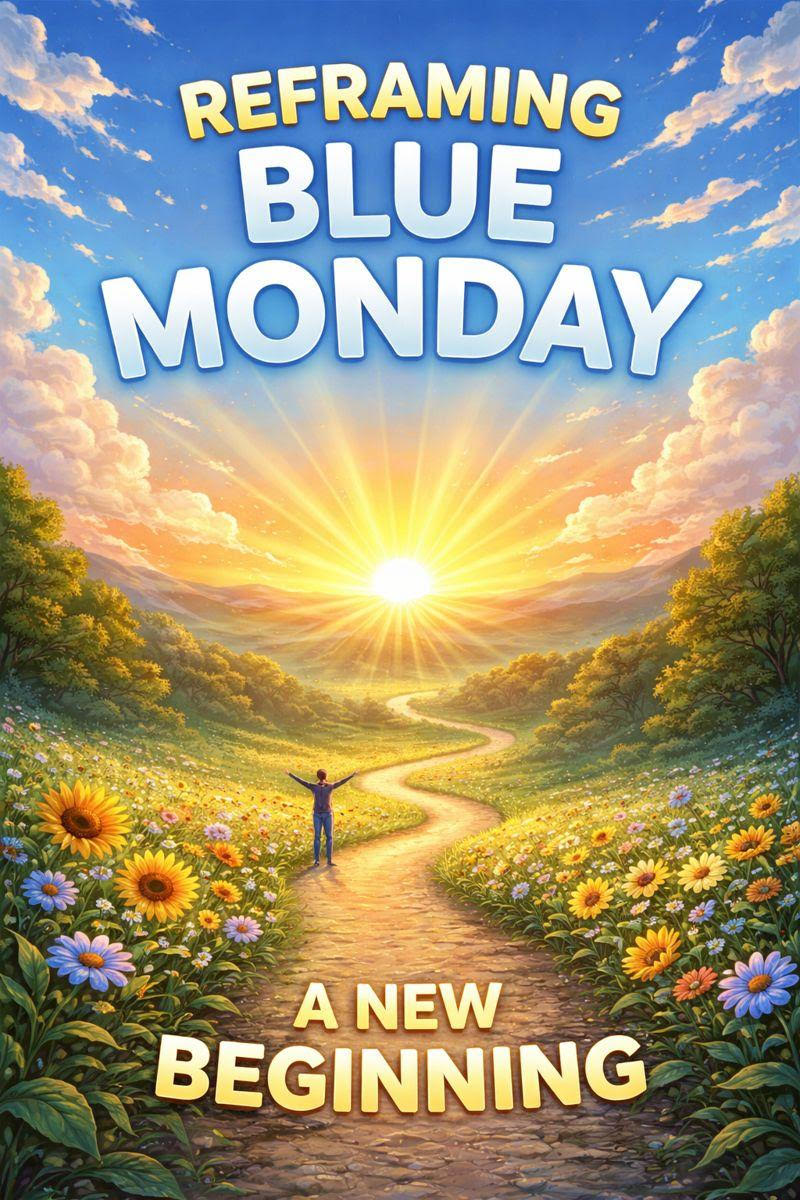
The Day After Blue Monday
What is Blue Monday? Blue Monday is the third Monday of January and is considered the saddest day of the year. The term was created by a psychologist named Cliff Arnall in 2004. It is a time when people may feel dreary as the holidays are over, it is frigid outside, and the sunlight fades earlier in the day.
While feeling blue in January is common, Blue Monday should be taken with a grain of salt. Labelling this day as the saddest day of the year can be harmful for mental health, as it puts an idea in our minds that we are not going to have a good day that day. It can also be stressful to look at your calendar and see that the saddest day of the year is approaching soon.
If we take every negative word to indicate sadness, how will people be able to identify if their sadness has become depression? How will we be able to bring awareness to depression if we are confused about what sadness is?
The benefits of Blue Monday are that they open conversations around mental health. Mental health is often stigmatized, and people may be reluctant to have open and honest conversations about what they are going through. Blue Monday gives people the space to express the obstacles they are facing and get feedback on how to cope with them.
People are not just extremely depressed on Blue Monday and back to normal the next day. Everyone has their ups and downs, and it is important that we as a society highlight this. Social media often makes people feel like others only have positive experiences, but although it is hard to remember, it is only a highlight and a small snippet of more complicated lives. FOMO is real, and your feelings are valid. However, you should know you are not alone.
While Blue Monday creates conversations around mental health, it should be mentioned that mental health should be discussed more regardless. Mental health is the highest public health challenge right now, yet it is common for people to feel like they are struggling with their mental health by themselves. It is important to talk to your loved ones about your life, take care of your physical health, and reach out if you need help.
This being said, feeling sad, especially this time of year, is common, and there are resources and strategies to help cope with this. Exercise can be extremely beneficial for mental health. It does not have to be a high-stress activity. A walk in the park, a 30-minute lift, or any movement that makes you feel your best will suffice. Exercise releases endorphins, which are neurotransmitters that make us feel good. The specific brain chemical released during exercise is called beta-endorphin, and it has been shown to decrease feelings of pain. People who exercise on a regular basis have lower levels of anxiety and depression.
Another way to help nurture your mind is to get good, consistent sleep. Sleep sometimes gets pushed to the side with all we have to balance in life, but it is what helps our bodies recover and reset each day. Sleep deprivation can affect our ability to manage our emotions. A study in the UK found that individuals who woke up earlier and went to bed earlier had improved mental health. This also helps people jumpstart their day and get as much sunlight as possible since it gets dark earlier in January.
Another strategy for taking better care of your mental health is sticking to a routine you enjoy. Routines can decrease stress and put your mind into a consistent rhythm. In a world of uncertainty, you can always go back to your routine and know that it will be a stable structure for you as you go through your day. Putting a routine in place should not cause stress because it did not turn out perfectly that day. It is meant to give you a baseline and help ground you when life gets chaotic. A simple routine could be eating breakfast, going on a run, showering, going to work, eating lunch, doing yoga, watching your favorite show, and going to sleep. It might sound simple, but it gives you something to look forward to.
When I am feeling down this time of year, I love to play soccer. Soccer is my escape and the passion that brings me pure joy. When I am running in the cool wind, laughing with my friends, and mindlessly dribbling the soccer ball, I feel at peace. My mind is quiet, and the world settles down. I feel like I can be myself and put all my focus into improving my skills. All my worries from school and life fade away for a bit, and I can just be me.
I think it is extremely beneficial to find a passion that allows you to express yourself. In different aspects of our lives, we may feel like we have to be someone else. For example, at work, you may be expected to be professional and not too rambunctious. Having a passion that is close to your heart helps you express your unique self and gives you a reason to keep going. When days are dark, gloomy, and rainy, I feel a sense of peace knowing I get to be silly and play my favourite sport with amazing people.